See prices From 16.5 EUR · Free cancellation available
Contents
Is Seville safe for tourists? Yes, and I don’t think it’s a close call. Seville sees the same tourist city issues most popular European destinations deal with, mainly pickpocketing in crowded areas, but violent crime against visitors is genuinely rare. Here’s what I’d actually worry about: your phone or wallet in a packed square, not your physical safety walking around.
I’d rather give you a specific, honest picture than a vague “it’s generally fine” answer that doesn’t tell you anything useful. Below is where the real risk concentrates, what I’d actually do about it, and why I think an anxious first time visitor can relax more than the internet sometimes suggests. This is one piece of the wider Seville travel guide, which covers the rest of the practical groundwork for a first visit.
What’s the Biggest Safety Risk for Tourists in Seville?
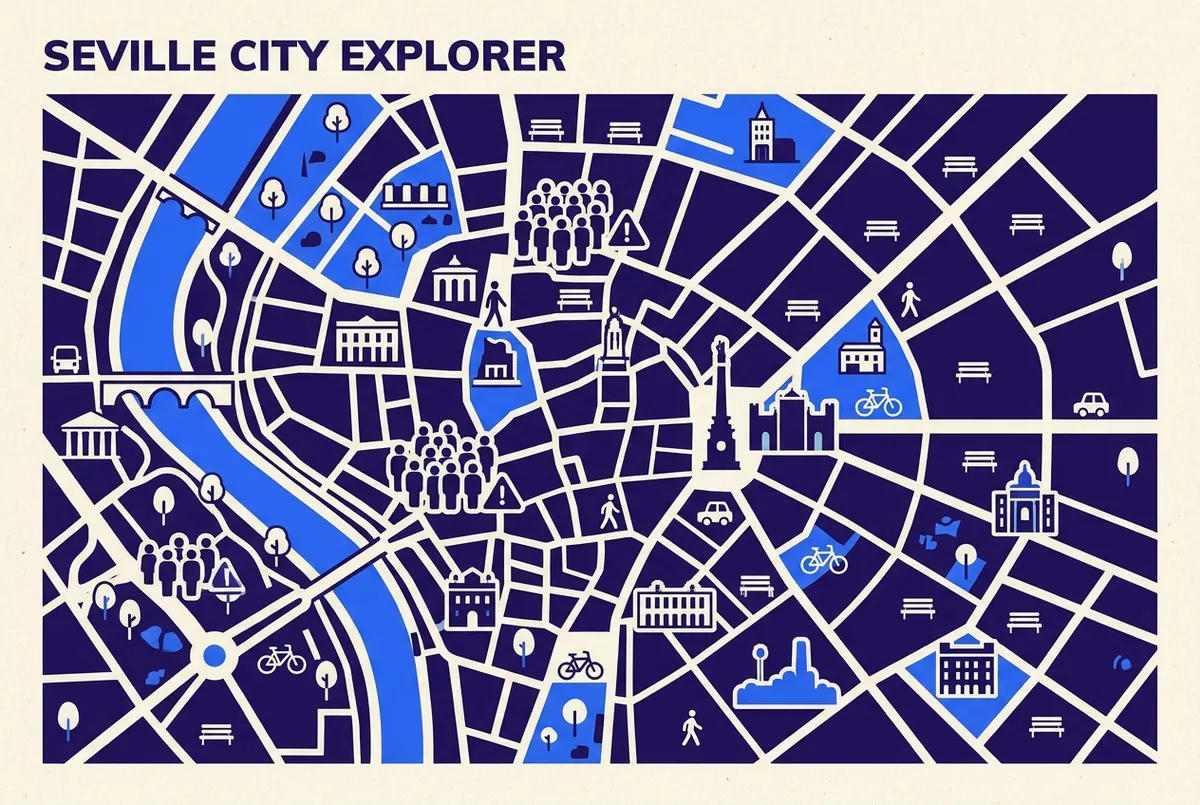
Pickpocketing, by a clear margin. It concentrates in crowded tourist areas, the Cathedral queue, the Alcázar entrance, Plaza de España, and on the city’s buses and trams during busy hours. I’d keep bags zipped and worn in front in those specific spots rather than being paranoid everywhere you go, since the risk really does cluster around a handful of predictable locations.
Distraction theft is the usual method, someone asks for directions or points out something on your clothing while an accomplice goes for your bag. I’d be politely firm with unsolicited approaches in busy tourist zones rather than feeling rude for brushing someone off.
Check prices & dates
Ready to visit?
Book your tickets in advance: popular time slots sell out.
Generally, yes, in the main tourist areas and central neighborhoods. I wouldn’t avoid an evening stroll through Santa Cruz or along the riverside promenade out of excessive caution, these areas stay well lit and busy well into the night, especially in the warmer months when the whole city seems to be outside after dark.
That said, I’d apply the same common sense you’d use in any city of this size: stick to streets with other people around, keep an eye on your belongings in any crowded nightlife area, and I wouldn’t wander into unfamiliar residential streets alone very late just to find a shortcut. If you’re arriving late and tired, the airport transfer options are worth checking beforehand so you’re not figuring out a taxi fare at an hour when you’d rather be heading straight to bed.
Are There Specific Pickpocket Hotspots Tourists Should Know?
Yes, and naming them specifically is more useful than a general warning. The Cathedral and Alcázar queues are classic spots since everyone’s attention is on the line rather than their bag. Plaza de España draws large tour groups and photographers who aren’t watching their belongings closely. Public buses, especially crowded routes to and from major sights, are another common setting, since the close quarters make a distraction easy to pull off.
I’d keep valuables in a front pocket or a bag worn across your body in all of these specific places, and relax a bit more once you’re in quieter residential streets or sitting at a restaurant table.
Is Seville Safe for Solo Female Travelers?
Broadly yes, and I wouldn’t let solo travel plans get derailed by safety worries specific to Seville. The city is walkable, well populated in the evenings in tourist areas, and I haven’t seen anything in the general safety picture here that singles out solo female travelers for a different risk profile than any other visitor. The usual advice applies: trust your instincts in any situation that feels off, keep your accommodation address handy, and let someone know your general plans for the day if you’re heading somewhere less central.
What Should You Do If Something Is Stolen in Seville?
Report it to the local police, who have stations set up specifically to handle tourist reports efficiently in the city center, and I’d do this even for a minor theft since you’ll likely need a police report for any travel insurance claim. For the official government line on current risk levels in Spain generally, the UK’s foreign travel advice for Spain is a reasonable baseline to check before you go, though I wouldn’t expect it to say much beyond what’s covered here. Cancel any cards immediately through your bank’s app or a quick call, most major banks make this painless from abroad. I would not spend your trip anxious over a stolen phone or wallet once it’s reported and cards are cancelled, the practical steps are quick, and dwelling on it further just costs you the rest of your day.
Does Seville Have Any Common Tourist Scams to Watch For?
The main ones are mild rather than dangerous: overpriced menus at tables right in the busiest tourist squares, unofficial “guides” offering an impromptu tour for cash near major sights, and the occasional street vendor selling counterfeit goods who moves on quickly if police are nearby. I’d book official attractions and tours through the venue’s own site or a known platform rather than accepting an offer from someone who approaches you on the street, and I’d walk a block or two off the busiest square before sitting down for a meal if price matters to you.
Is Public Transport Safe in Seville?
Yes, the bus, tram and metro systems are safe in the sense that matters most to visitors, mechanically reliable and not associated with violent incidents. The pickpocket risk I mentioned earlier is the real concern on crowded routes, not anything more serious. I’d just apply the same bag awareness on a packed bus that I’d use in any crowded tourist city, and otherwise use public transport without a second thought.
Is a River Cruise a Safe, Low Effort Activity for Anxious Travelers?
I think it genuinely is, and it’s worth mentioning here specifically. A short Guadalquivir river cruise is a supervised, structured activity with a fixed route and a crew on board, which makes it one of the lowest stress things you can do in Seville if general city safety has you a little on edge. There’s no navigating unfamiliar streets, no managing a wallet in a packed queue, just a seat and about an hour on the water. I’d recommend it as an easy first activity for exactly that reason, something simple to settle into before you’re navigating the city’s busier spots on foot.
Should Safety Concerns Change How You Plan Your Trip?
Not meaningfully, in my honest opinion. I wouldn’t restructure an itinerary around safety worries in Seville the way I might for a handful of other destinations. The sensible precautions here are simple, specific, and easy to follow: watch your bag in a handful of named crowded spots, use common sense after dark, and otherwise go about your trip as planned. If anything, I’d spend more planning energy on dressing appropriately for the cathedral, budgeting realistically for food and attractions, and picking a comfortable season to visit than on safety itself. Once the practical basics feel settled, the things to do guide is the better next stop for actually planning your days.
What’s the Emergency Number if Something Goes Wrong?
112 works throughout Spain for police, medical or fire emergencies, and I’d save that number in your phone before you land rather than searching for it in a moment of stress. English speaking operators are generally available, though I’d still state your location clearly and slowly, street names and landmarks near the Cathedral or the river are usually recognized faster than a full address.
For anything less urgent, like a minor theft with nothing dangerous involved, the tourist focused police stations I mentioned earlier are the better first stop, since they’re set up specifically to handle these reports efficiently without the wait you might get at a general station.
Are Certain Neighborhoods Safer Than Others?
Not in a way that should change your itinerary, honestly. The historic center, Triana, and the areas around the main tourist sights are all comparably safe, with the same pickpocketing caveat applying roughly equally across busy spots in each. I wouldn’t avoid any specific central neighborhood out of safety concerns. If you’re staying somewhere further from the center to save money, I’d just check reviews for that specific accommodation rather than assuming a whole district is riskier based on distance from the Cathedral alone.
Frequently Asked Questions
Is Seville safe for tourists at night?
Yes, in the main tourist areas and central neighborhoods, which stay busy and well lit well into the evening. I’d use normal city sense rather than treating it as a high risk destination after dark.
What’s the main crime risk for tourists in Seville?
Pickpocketing in crowded tourist spots and on public transport, not violent crime, which is rare against visitors.
Is it safe to use an ATM in Seville?
Yes, generally. I’d use ATMs attached to a bank branch rather than a standalone currency exchange booth, and keep an eye on your surroundings the way you would anywhere.
Do I need travel insurance for a trip to Seville?
I’d get it regardless of destination, mainly for medical coverage and the practical help it gives if something is stolen, rather than because Seville carries unusual risk.
My honest take: Seville is a comfortable, walkable city, and I would not let safety concerns talk you out of visiting or push you toward an overly cautious itinerary. Watch your bag in the handful of crowded spots named above, and spend the rest of your energy actually enjoying the trip instead of worrying about it.