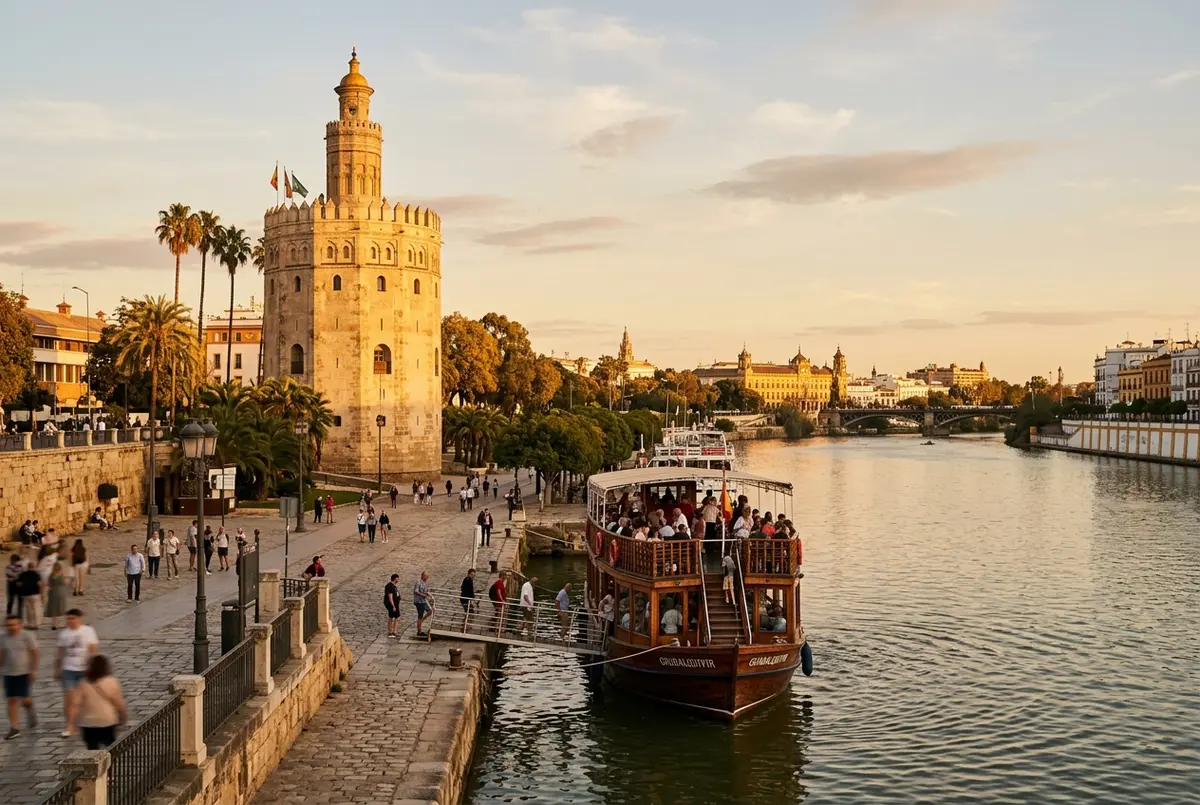
Torre del Oro, Seville? It’s the 13th century watchtower standing right on the riverside promenade, and it’s also the landmark closest to where most of the Guadalquivir cruises on this site actually depart from. Here’s what I’d actually tell you before you walk past it on your way to board a boat: it’s not just a photogenic old tower, it was a genuinely functional piece of the city’s river defenses for centuries, and knowing that changes how it reads once you’re looking at it.
I think this is one of those landmarks visitors photograph constantly without really knowing what they’re looking at, which is a shame, because the actual story behind it is more interesting than “pretty old tower by the water.”
What Is the Torre del Oro in Seville?
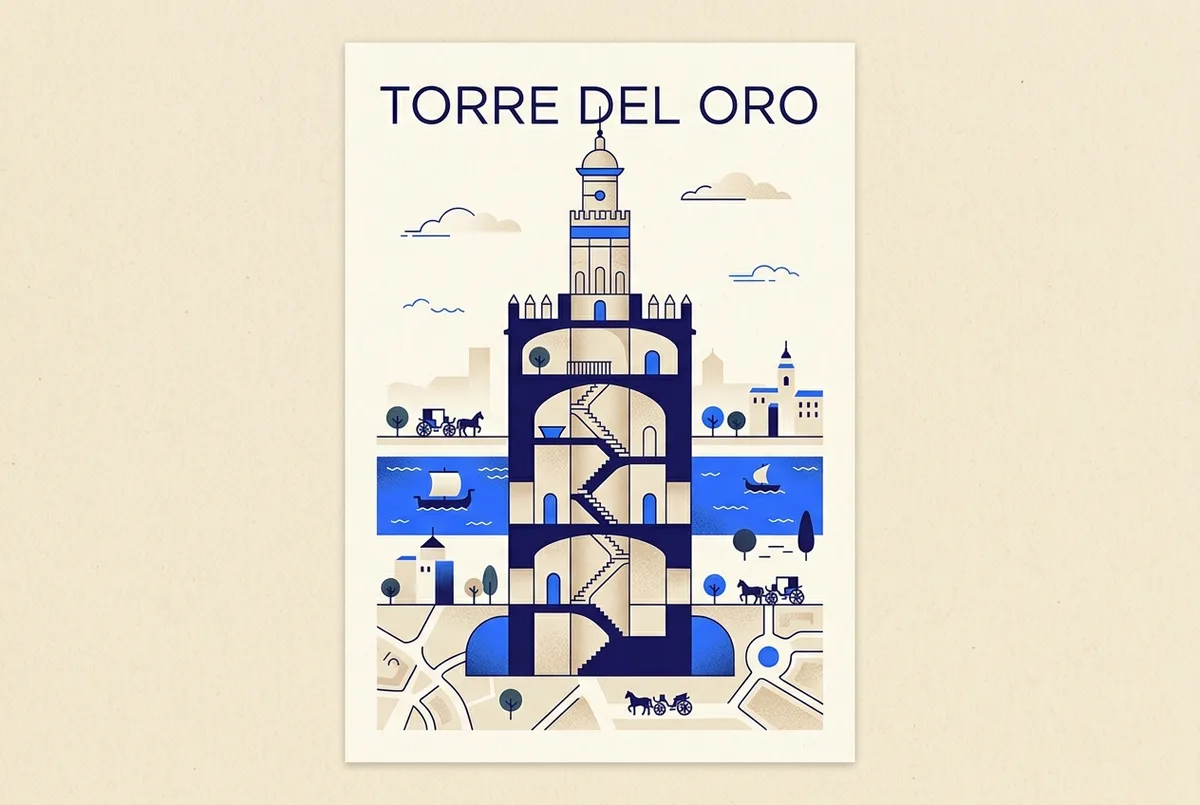
The Torre del Oro is a twelve sided watchtower built in the early 13th century by the Almohad Caliphate, the Islamic dynasty that controlled Seville before the Christian reconquest. It sat at the river’s edge as part of the city’s defensive wall system, specifically built to help guard and control traffic moving along the Guadalquivir. I’d call it one of the clearest surviving pieces of Seville’s medieval defenses, since so much of the rest of the old city walls were torn down long ago.
Why Is It Called the “Tower of Gold”?
Nobody knows for certain, and I actually find the uncertainty kind of refreshing in a city that usually has a tidy legend for everything. The leading explanations are that the tower was once covered in golden colored tiles or plaster that caught the light off the river, or that it was used to store gold and treasure arriving from the Americas during Seville’s trading era. I wouldn’t present either one as definitively proven, historians genuinely disagree, but both explanations tie the tower back to the same theme: a river that once carried serious wealth into this city.
How Old Is the Torre del Oro, Exactly?
It dates to around 1220, built under Almohad rule a few decades before the Christian conquest of Seville in 1248. That makes it older than most of the buildings tourists associate with the city’s golden age, the cathedral and the Alcázar both came later in their current form. I’d say that’s part of what makes it worth a close look, it predates the Seville most visitors picture by a full century or more.
Was It Really Part of a Chain Across the River?
Yes, and this is my favorite detail about the tower. A heavy chain once stretched from the Torre del Oro across the Guadalquivir to a matching tower on the opposite bank, the Torre de la Plata’s lost counterpart, allowing the city to physically block ships from passing when needed. I would not call this a decorative flourish, it was a real, functional defense mechanism, and I think it’s the single fact that best explains why the tower sits exactly where it does.
What Is the Torre del Oro Used for Today?
Today it houses a small naval museum, the Museo Marítimo, run by the Spanish navy, covering Seville’s maritime and exploration history with model ships, maps, and artifacts tied to the city’s trading past. I’d call it a reasonable short stop if you have half an hour free and an interest in the city’s shipping history, though I wouldn’t plan a whole afternoon around it, the collection is compact rather than sprawling.
Check the official site for current opening hours and ticket prices before you go, since museum schedules shift and I’d rather you confirm the day of your visit than rely on a number that might be out of date by the time you read this.
Why Do River Cruises Depart Right Next to It?
Mostly because of geography rather than design, the riverside promenade beside the tower happens to be one of the most convenient, central docking spots on the whole river, a short walk from the cathedral and the Santa Cruz quarter. Several of the Guadalquivir cruises on this site board from the dock just along this stretch, so you’ll likely be standing in view of the tower while you wait to board anyway. I’d use the wait time to actually look at the stonework up close, you’ll see it from the water in a minute, but not from this angle.
What Did the Torre del Oro Actually Protect the City From?
Mostly hostile ships and raiders approaching from the river mouth, since the Guadalquivir was Seville’s direct line to the Atlantic and, later, to the Americas, which made it a genuine strategic vulnerability as well as an economic asset. I’d think of the tower less as decoration and more as an early warning and blockade point, the kind of infrastructure a city builds when its wealth depends on a waterway it can’t afford to leave undefended. That’s also roughly why a matching tower and a chain existed on the far bank, a single tower alone wouldn’t have been enough to actually stop a ship.
I find it worth remembering that this defensive function mattered for centuries before anyone cared what the tower looked like in a photograph, which is a very different frame than how most visitors encounter it today.
Should You Visit the Tower Itself or Just See It From the Boat?
Both, honestly, if you have the time. Seeing it from the water gives you the full silhouette against the riverbank, the view the tower was originally positioned to control, while visiting on foot lets you see the stonework and the small museum up close. I would not treat one as a replacement for the other, they’re genuinely different experiences of the same landmark.
My honest recommendation is to walk around the outside even if you skip the museum itself, the closer view of the stonework and the twelve sided shape is worth the five minutes it takes.
Does the Tower Look Different From Different Parts of the River?
Yes, somewhat. From directly across the water on the Triana side, the neighborhood that faces the tower, you get the classic postcard angle with the tower framed against the old town skyline. From the promenade right beside it, you see the stonework and the proportions much more clearly, but lose that skyline backdrop. I’d try to catch both angles if photos matter to you, one from the water and one from the opposite bank on foot.
What Else Can You See Near the Torre del Oro From the Water?
Almost every cruise that departs near here also passes under at least one of the historic bridges and gets a clear look across to Triana within the first few minutes. The bridges you’ll pass along this stretch and the Expo ‘92 pavilions further along the route both sit on the same general stretch of river, so the tower is really just the first landmark in a short sequence rather than a standalone sight.
I’d say the tower earns the most attention of the four simply because it’s the one you see first and the one closest to where you board, but I wouldn’t call it more interesting than the others, just better positioned.
What River Is This Tower Actually Guarding?
The Guadalquivir, the same river that made Seville one of the most important port cities in European history for a couple of centuries. Understanding why this specific stretch of water mattered enough to defend with a chain and a tower makes the whole landmark click into place, rather than just reading as an old building that happens to be near the water. The tower’s own official record covers the dates and the Almohad construction in more formal detail than I’ve given here, if you want the primary source.
My Honest Take on the Torre del Oro
I’d rank it as the single most worthwhile landmark on this river to actually learn something about before your cruise, precisely because it’s the one you’re guaranteed to see up close, whether you’re boarding right beside it or just walking the promenade. The tower, the chain, and the uncertain gold legend all add up to a genuinely good story, and I think it’s a shame when visitors walk past it as nothing more than scenery.
Frequently Asked Questions
How old is the Torre del Oro in Seville?
It dates to around 1220, built by the Almohad Caliphate roughly a century before the Christian reconquest reshaped much of the rest of the city.
Why is the Torre del Oro called the Tower of Gold?
The exact reason isn’t confirmed, the leading theories involve golden colored tiles catching the light off the river, or gold and treasure once stored inside.
Can you go inside the Torre del Oro?
Yes, it houses a small naval museum covering Seville’s maritime history. Check the official site for current hours before visiting.
Do river cruises actually depart next to the Torre del Oro?
Yes, several of the Guadalquivir cruises on this site board from docks on the same riverside stretch, within easy sight of the tower.
Yes, I’d do both if you have time. The boat gives you the classic silhouette view, while visiting on foot lets you see the stonework and the small museum up close.
What was the Torre del Oro originally built to defend against?
Hostile ships and raiders approaching along the Guadalquivir from the Atlantic, which made control of this stretch of river a real strategic priority for the city.
book the seville boat tour that departs right at this tower →